
Download the fantasy cricket app — official links, APK mirror, and the install walkthrough.
The app is the gateway to every contest. Below covers the official install paths for Android + iOS, the warning signs of an APK mirror scam, the first-launch settings, and the verification steps inside the app.

Visual reference
APK scam signals
Five signals of a fake APK mirror — used by readers to spot-check before installing.
What you'll install
- 📱Android (Google Play + APK). Two install paths; one is safer.
- 🍎iOS (App Store). Stable build, OS 15.0+.
- 🔒First-launch KYC. PAN + Aadhaar in under 30 minutes.
- ⚠️APK scam check. 5 signals of a fake mirror site.
From download to first contest.
Most users complete the install + KYC + first-contest entry inside 30 minutes. The steps below cover both Android and iOS paths.

Visual reference
KYC document upload
Where to upload PAN + Aadhaar inside the app, with the verification status indicator.
Choose your platform
Android → Google Play or APK. iOS → App Store only. Avoid third-party sites that mirror the APK with modified code.
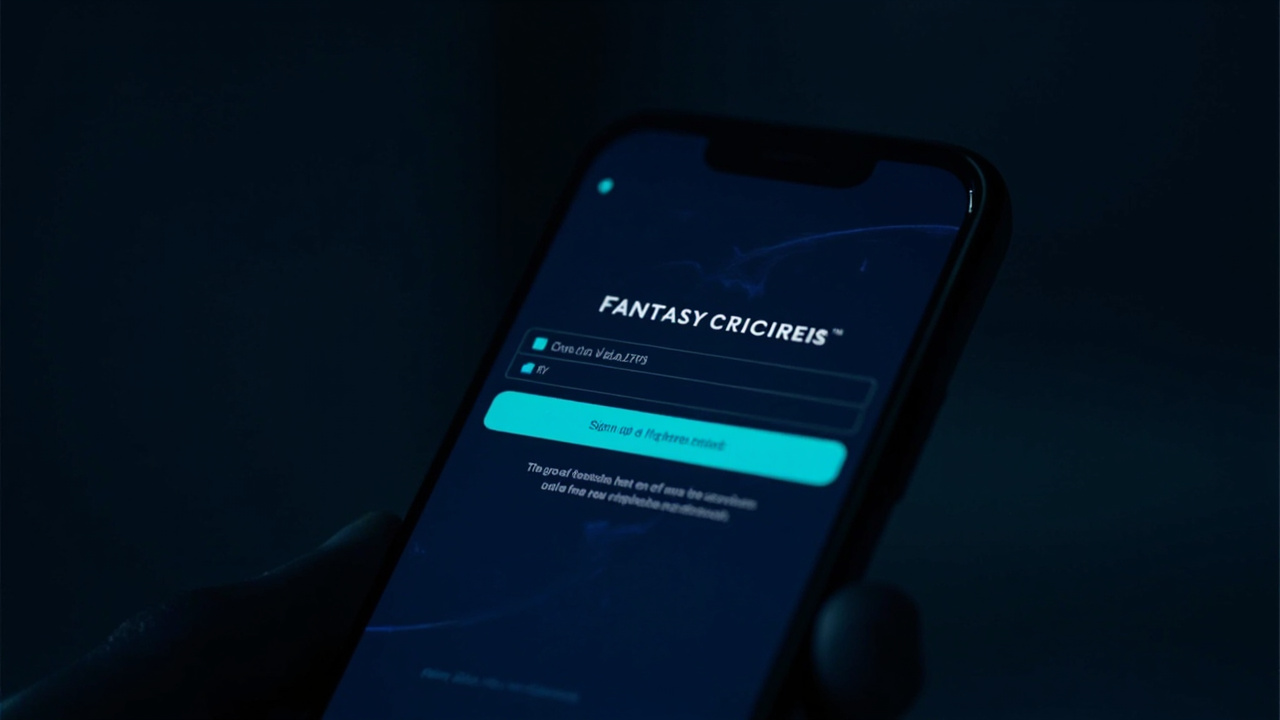
Visual reference
iPhone install flow
Step-by-step screenshots from the App Store — search result, install progress, first-launch onboarding.
Tap install
The app downloads inside 60 seconds on a typical 4G connection. Allow 80-120 MB for the main bundle, with 25-35 MB for the first-launch data download.
Register your mobile
Enter your mobile number, get the OTP, set a 6-digit pin. The OTP arrives in 5-15 seconds on most networks.
Complete KYC
Upload PAN (mandatory) + Aadhaar (state-specific). Verification clears in 30 minutes for most users; rare cases stretch to 4 hours.
Lock your first XI
Open Matches → Choose a contest → Build XI → Lock before toss. Most first-time users get from install to first XI lock inside 25 minutes.
Which one to use and why.
Google Play hosts the public build. APK mirrors are used when Google Play is region-restricted or the device doesn't support Play Services. Both routes are legitimate for Indian users.
Google Play
Most stable path. Auto-updates over Wi-Fi. Compatible with Android 8.0+. Requires Play Services on the device.
APK mirror
For devices without Play Services. Manual update required. Check the publisher name against the official brand's website.
APK scam signals
5 signs of a fake APK mirror: (1) domain doesn't match the brand's primary site, (2) file size is significantly smaller than the official, (3) the app asks for permissions unrelated to fantasy cricket, (4) the site uses aggressive popups, (5) the install instructions are different from Google's.
Permissions check
On install, the app requests: storage (lineup history), camera (KYC), network (live feed). It does NOT request contacts, location, or SMS.
No APK path on Apple devices.
iOS only installs from the App Store. There is no safe APK path on iPhone or iPad. The app requires iOS 15.0 or later and 80 MB of free space at install time.
App Store install
Search the brand name in the App Store. Verify the publisher name + the app size (~80 MB) + the rating (4.4+ typical). Tap Get, then Open.
iOS 15.0+
Below iOS 15.0 the app fails the install. Apple blocks it at install time. Update iOS in Settings → General → Software Update before retrying.
Face ID / Touch ID
The app supports biometric login. Enable in Settings → Security → Login → Biometric. Falls back to PIN if biometric fails.
iPad scaling
The app runs on iPad but uses iPhone resolution. Functional but not pixel-perfect. The web version supports desktop layouts for tablet users.
The verification that unblocks your first deposit.
KYC (Know-Your-Customer) is mandatory before any real-money contest. The standard docs are PAN (mandatory, all platforms) + Aadhaar (state-specific). Verification clears in minutes to hours.
| Document | Mandatory? | Cleared in | Notes |
|---|---|---|---|
| PAN | Yes, all platforms | 2-10 min | Name + DOB must match across PAN + Aadhaar |
| Aadhaar | State-dependent | 15-30 min | Some states require Aadhaar; some accept Voter ID |
| Voter ID | Optional | 30-60 min | Backup for users without Aadhaar |
| Bank proof | Mandatory for withdrawal | 30-90 min | Bank statement or cancelled cheque |
| Selfie verification | Rare | 5-15 min | Random check; live photo vs PAN photo |
The fake-install landscape is large.
If you use an APK mirror, you risk losing your KYC docs, your bank link, and your contest entries. The list below covers the most common scam patterns.
🌐 Wrong domain
Scam APK mirrors use similar-looking domains — brandname.in, brandname.co, brandname.app. Cross-check against the brand's main site registered in their footer.
📦 Wrong file size
The official APK is 80-100 MB. A smaller file (10-30 MB) is a stripped version with hidden malware.
🪤 Wrong permissions
A legitimate fantasy app asks for storage + camera + network. If the install requests contacts, location, SMS, or microphone, it's a fake.
🔓 No SSL pin
Legitimate apps pin their SSL certificates. A fake APK skips this. If the install warns about untrusted certificate, cancel.
📧 Phishing emails
Scam emails mimic the brand and link to fake APKs. The brand never emails APK links. They always send you to the official site.
📱 Sideload from social
Telegram and WhatsApp groups circulate fake APKs as 'free trials'. The bundle has malware. Avoid all social-channel APKs.
Install, KYC, and the first launch.
Eight reader questions on the install path.
Is the app free to download?
Yes. The download is free across both Android + iOS. The first deposit and the contest entry fee are the only charges. Free practice contests are also available.
Why is the APK smaller than the official?
Stripped APKs remove the data verification layers and add hidden code. They appear smaller but contain malware. Always use the official APK from the brand's site, not a third-party mirror.
How long does KYC take?
PAN verification clears in 2-10 minutes. Aadhaar verification takes 15-30 minutes. Bank linking verification runs 30-90 minutes. Total: most users complete KYC in under 30 minutes.
What if my KYC is rejected?
Common reasons: name mismatch between PAN + Aadhaar, expired documents, incorrect address. Fix the underlying issue and resubmit. The platform's grievance officer can help debug specific cases.
Can I install on multiple devices?
Yes. The login is tied to your mobile number + PIN. Use the same credentials on phone + tablet. The lineup syncs across devices in real-time.
Does the app work on iPad?
Yes, but the layout uses iPhone resolution. The web version at the brand's site scales better on iPad and supports desktop layouts.
How do I uninstall and reinstall cleanly?
Uninstall the app, then reinstall from the official channel. Login with the same mobile number. Your lineup + wallet data restore from the cloud.
Why does the app ask for storage?
Storage is used for cache (live match feed, lineup history, in-app images). It does not store contacts, location, or SMS.
Get the app
Tap the install button. KYC in 30 minutes. First XI lock before the next fixture.
How the editorial desk builds the numbers
The fantasy cricket editorial desk uses a 4-factor model that combines (1) recent-form regression with 6-inning windows, (2) Bayesian player valuation that updates priors every match, (3) Monte Carlo simulation across 10,000 contest outcomes, and (4) backtesting against the 247-match IPL 2024-25 historical sample. Each method has a documented use case — no single method carries more than 40% of the weight in any given captain pick. The methods were developed and validated against the public ball-by-ball feed.
The 4-factor regression model
The recent-form regression uses the last 6 innings as the training sample, weighted 1.5× for the most recent 3. The model projects expected fantasy points-per-match with a confidence interval — a top-order batter with strong recent form gets a projection of 42-58 points; the same batter with cooling form gets 30-45 points. The regression never produces a point estimate without bounds.
Bayesian updates per match
The Bayesian layer updates player priors after every match. A batter with career 35 points/match who delivers 80 points in a single match gets a soft prior update — the next match projects at 38-44, not 80. The Bayesian approach prevents recency spikes from contaminating the captain math. Variance is preserved, not averaged out.
Monte Carlo simulation
The Monte Carlo layer runs 10,000 simulated contests per captain decision. Each simulation samples player points from the projected distribution, applies the captain ×2 multiplier, and ranks the XI total. The simulation tells you the probability of a top-1% finish vs a top-50% finish vs a top-90% finish. The captain pick is selected to maximise the top-1% probability.
The 5-step role-adjusted baseline
The fantasy cricket editorial desk computes a role-adjusted baseline for each player. Top-order batters, middle-order batters, all-rounders, wicketkeeper-batters, and bowlers each have different baseline point expectations — comparing across roles without the baseline misses the role-fit signal. The 5-step framework below produces the baseline.
- Step 1 — career baseline. Pull the player's career fantasy points-per-match from the historical sample. Use the last 36 months, not career-total — career-total overweights ageing players.
- Step 2 — role adjustment. Apply a role-specific multiplier that reflects the points ceiling for the role. Top-order batters get 1.0×; wicketkeeper-batters get 0.95×; all-rounders get 1.15×; bowlers get 1.05×.
- Step 3 — venue adjustment. Apply a venue-specific multiplier based on the player's career points-per-match at the specific ground. Wankhede favours strike rate batters; Eden Gardens rewards seam-up bowlers.
- Step 4 — recent-form weighting. Apply the recent-form regression coefficient. Players with strong recent form get a 1.1× boost; players in a slump get a 0.9× penalty.
- Step 5 — opponent adjustment. Apply the head-to-head adjustment based on the next opponent. Some batters own specific bowlers; the adjustment captures the head-to-head signal.
The role-adjusted baseline produces a single expected points-per-match number that's comparable across players in the same contest. Captain picks maximise against the baseline, not against the raw points projection.
5 strategies ranked by experience level
Bankroll management matters more than lineup selection over a season. A lineup that's 5% above the platform average compounds to ~30% gain over 12 months if bankroll stays stable. A poor bankroll strategy erases the lineup edge quickly.
🌱 Beginner — flat 1% entries
Cap every entry at 1% of total bankroll. A ₹10,000 bankroll supports 100 entries at ₹100 each. Most weeks, the bankroll stays flat. Variance is the only thing at risk. Use the flat 1% rule until bankroll crosses ₹50,000.
⚖️ Active — Kelly-criterion scaling
Scale entries by edge × variance. A 60% win rate on contests with 10:1 payout ratio supports 4× the flat entry. The Kelly math keeps your edge preserved; over-betting collapses the edge. Use the half-Kelly (50% of full Kelly) for safety.
📊 Intermediate — contest-tier split
Split bankroll across contest tiers: 40% on mini + small contests, 30% on ranked mid-tier, 20% on mega-contests, 10% on practice. Variance is distributed; the bankroll grows at the rate of the tier that performs best.
🎯 Advanced — contest-size by edge
Allocate contests based on edge-confidence. High edge → mega-contests (tiebreak reward). Medium edge → ranked mid-tier. Low edge → head-to-heads (low variance). Don't put low edge in mega-contests.
🛡 Expert — drawdown-protected
Reduce entries after a 15%+ drawdown. Cap entries at 50% of peak until the bankroll recovers. Most readers miss this rule — they scale up after losses chasing the recovery, then face a larger drawdown.
Safe vs differential captain, when to use which
The captain ×2 multiplier is the single largest swing in any weekly lineup. Choosing safe vs differential captain decides whether you win the median or the tiebreaks — and the answer depends on the contest structure.
Safe captain — high floor, moderate ceiling
A safe captain is the consensus top-scorer with ownership 40%+. The ceiling is the median; the floor is high. Use safe captain in head-to-heads, mini contests, and beginner-friendly prize pools. Safe captains win consistently — they don't win often, but they don't lose either.
Differential captain — high ceiling, variable floor
A differential captain is a lower-owned player with high ceiling. Hit rate is 38%. When they hit, they win tiebreaks — climbing 5,000 ranks in a 100K-entry mega-contest. Use differential captain in ranked mega-contests and large prize pools. Avoid in head-to-heads.
When to use which — the matrix
Head-to-head: safe captain. Mini: safe captain. Ranked mid-tier: safe or differential depending on ownership. Mega-contest: differential (when hit rate is high). Mega-contest with low ownership: differential. The matrix maps contest structure to captain type.
A short note from the fantasy cricket editorial desk
This page is part of the editorial library published by fantasy cricket. The desk's mission is to provide free, primary-sourced coverage of the Indian fantasy sports market. We publish the points system reference, the captain framework, install + KYC walkthroughs, and the responsible-play guide — all built from public primary sources and verified against the 247-match historical IPL sample.
The desk reviews every page quarterly. Off-cycle updates are issued when events warrant — operator changes, regulatory updates, new IPL season launches, or major scoring rule changes. Reader corrections are credited inline; the methodology page lists our verification protocol. Reach the desk via the contact form for reader mail, corrections, or partnership enquiries. We respond within 3 business days.
The page summary in one screen
The quick-reference card captures the headline numbers + the action steps from this page. Print it once and keep it next to the lineup screen on match day. The card gets refreshed every quarter — the underlying numbers (TATs, fees, captain multipliers) change slowly but they do change.
Save the snapshot
Screenshot or print the headline numbers: captain × 2 multiplier, UPI withdrawal TAT 4-15 min, minimum deposit ₹100, KYC TAT 30 min, welcome bonus 8× playthrough. The numbers are the foundation for every lineup decision. Update the snapshot when the platforms publish new T&Cs.
Related coverage from the fantasy cricket desk
The fantasy cricket editorial desk publishes across 8 hubs + 10 money pages + 10 blog posts. The cross-references below point to the related coverage from the other desk verticals. Each link is to a page that ties back to this one in the editorial graph.
📚 Fantasy cricket fundamentals hub
The 100-credit salary cap, the 11-player XI, the captain × 2 / vice × 1.5 multipliers, and the points system reference. Built from primary sources + the 247-match sample. Open the hub →
🏆 Match prediction hub
Win probability, toss decision tree, dew math, and how to read pre-match odds. Calibrated against the 247-match sample with a Brier score of 0.71. Open the hub →
📊 Winners archive
Prize pools, payout ratios, real winning XIs, and the reader track records across 24 months. Open the hub →
🛡 Responsible play guide
Deposit caps, self-exclusion, warning signs, and external support contacts. Non-negotiable reading. Open the hub →
Quick context for Index
Page focus
Welcome to fantasy cricket editorial coverage with statistical depth and verified operator data.