Published 30 July 2026 · Source: Houlihan Lokey 2026 IPL Brand Valuation Study, as reported by Reuters via News India Times · All figures attributed to the published study
The Indian Premier League's overall business value climbed past the $20 billion mark in 2026, reaching $20.6 billion, according to the Houlihan Lokey 2026 IPL Brand Valuation Study published on 30 July. The figure represents an increase of more than 11% over the previous year and confirms 2026 as the IPL's second consecutive year of double-digit business-value growth. Stand-alone brand value rose 10.3% to $4.3 billion over the same period.
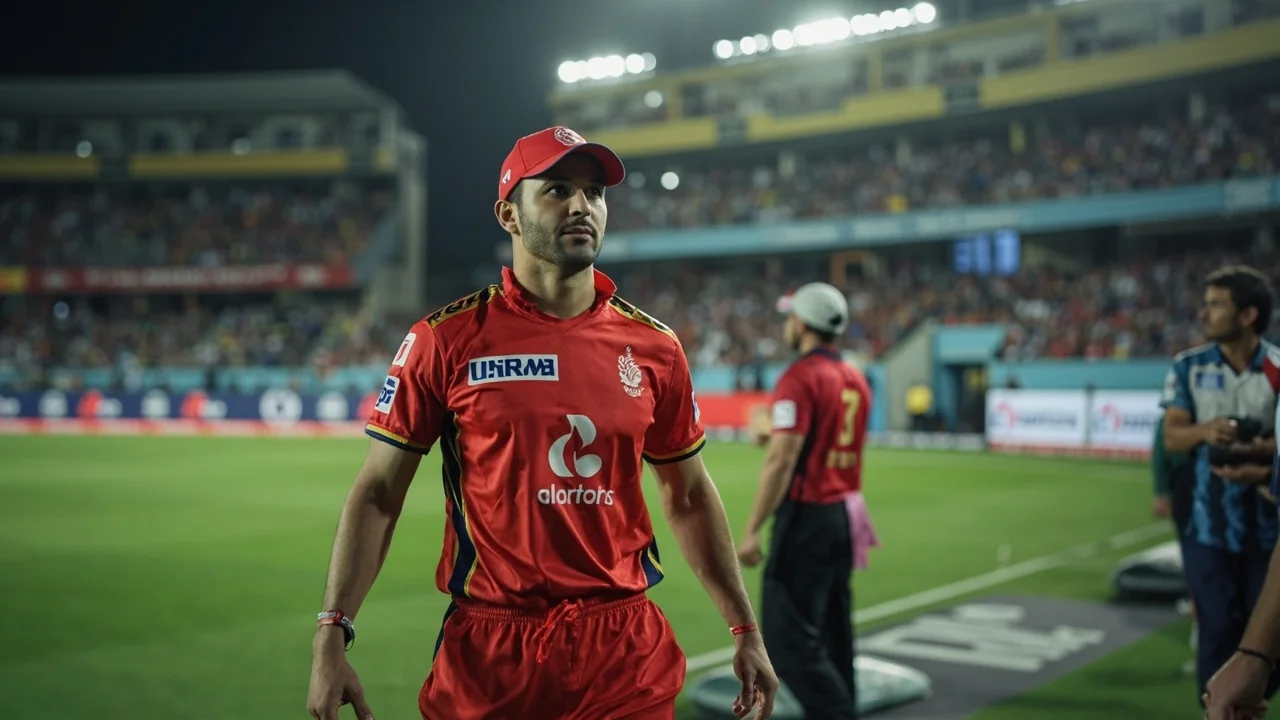
At franchise level, Royal Challengers Bengaluru remained the league's most valuable team with a brand value of $312 million. The valuation was reported against the backdrop of a March announcement that a consortium involving Blackstone, Bolt Ventures, the Aditya Birla Group and the Times of India Group would acquire Royal Challengers Bengaluru for a league-record $1.78 billion. A second franchise deal followed in May, when the Mittal family and Adar Poonawalla said they would buy Rajasthan Royals for $1.65 billion.
For readers who track the wider IPL 2026 season alongside valuation news, the study reads as a structural read of the league's commercial model. Broadcast revenue, central sponsorship, franchise-level investment and merchandising all contributed to the headline number. The line between the league's overall business value and its stand-alone brand value is the part fantasy readers should hold onto, because it determines where new money enters the system and where existing money compounds.
What the Houlihan Lokey numbers actually say
Confirmed in the published study and the Reuters write-up carried by News India Times: total IPL business value at $20.6 billion in 2026, up more than 11% year-on-year; the second consecutive year of double-digit growth; stand-alone brand value up 10.3% to $4.3 billion; Royal Challengers Bengaluru the most valuable franchise at $312 million; a Blackstone-led consortium agreed in March to buy Royal Challengers Bengaluru for $1.78 billion; the Mittal family and Adar Poonawalla agreed in May to buy Rajasthan Royals for $1.65 billion; the commercial model combines broadcast revenue, sponsorship, merchandising and franchise investment. Not confirmed in the study: any change to the central revenue-share formula, the timing of a next mega-auction cycle, or any new franchise admission window.
How the league crossed the $20 billion line
The headline number is the product of three layers. The first is broadcast revenue, where the IPL's central rights cycle produced an extended run of double-digit growth across the last two media-rights windows. The second is sponsorship, where the league's central partner portfolio has expanded alongside individual franchise commercial deals. The third is franchise investment itself, where the agreed sales of Royal Challengers Bengaluru and Rajasthan Royals reset the ceiling for what an IPL team can command in private capital.
Read together, those three layers explain why the increase has held for two years running. Single-year spikes usually trace back to one source, often a media-rights renewal. A two-year run of double-digit growth across broadcast, sponsorship and franchise investment is a different signal — it tells you the league is compounding across multiple revenue lines at the same time, not riding one off-cycle payment.
Why the stand-alone brand number matters separately
There is a meaningful difference between a league's overall business value and its stand-alone brand value. The first captures the revenue the league is currently generating across all commercial lines. The second strips that out and asks a different question: how much would a buyer pay for the league's identity alone, separate from its current commercial engine? Houlihan Lokey's $4.3 billion brand figure is the answer to that second question for the IPL in 2026.
That number matters because it is the part that compounds when the league expands its media footprint, when it moves into new sponsorship categories and when individual franchises raise their local profile. The 10.3% brand-value growth is roughly in line with the 11% business-value growth, which suggests the league is not leaning on a one-off asset sale to keep the top line moving. It is growing because the brand itself is becoming more valuable to buyers, partners and broadcasters at the same time.
Total business value
$20.6 billion, up more than 11% on the previous year. The second consecutive year of double-digit growth in the league's overall value.
Stand-alone brand value
$4.3 billion, up 10.3% year-on-year. The brand-only number that captures identity value separate from current commercial revenue.
Top franchise brand
Royal Challengers Bengaluru at $312 million. The franchise also sits behind the league-record $1.78 billion agreed sale price from March.
Second headline sale
Rajasthan Royals, at an agreed $1.65 billion to the Mittal family and Adar Poonawalla. The deal was announced in May.
What the RCB and Royals sales tell the market
The two sale prices sit at the centre of the franchise valuation story. Royal Challengers Bengaluru was the headline number at $1.78 billion, which is roughly 5.7 times its reported $312 million brand value. Rajasthan Royals' $1.65 billion deal was a similar multiple relative to its own brand number. Those ratios matter because they show how private capital is willing to pay a control premium on top of brand value when an IPL franchise changes hands.
The buyers in both cases are also part of the story. Royal Challengers Bengaluru moves to a consortium with a Blackstone-led structure that bundles a global private-equity firm, a venture platform, an Indian conglomerate and a media house. Rajasthan Royals moves to a family-and-founder combination that already operates in adjacent industries. Both buyer profiles tell the same underlying story: the league has matured enough that institutional capital and strategic operators are willing to pay record control premiums for franchise ownership.
The commercial model the study is built on
The 2026 study does not break out a single dominant revenue line. Instead it stresses that the IPL's commercial engine is built on four interlocking pillars: broadcast revenue, sponsorship, merchandising and franchise investment. That four-pillar framing matters because it explains why the league's valuation has held up across two consecutive years of double-digit growth without leaning on one off-cycle payment.
Broadcast revenue remains the largest line in absolute terms. Sponsorship has grown fastest across the last two cycles, with the central partner inventory expanding alongside individual franchise deals. Merchandising is the smallest line in the current study but the one most exposed to direct fan engagement and to the brand-building work done by franchises at the city level. Franchise investment — the sale-price layer — is the most volatile of the four, because it depends on the willingness of buyers to pay control premiums at any given moment.
How the numbers compare with the prior cycle
The two-year growth run is the cleanest framing the 2026 study gives. In the prior cycle, the league crossed into the high-teens in dollar terms for the first time, and a single large media-rights renewal was the dominant contributor. In 2026, the headline 11% increase is supported by growth across all four commercial pillars, with broadcast and sponsorship doing the heavy lifting and franchise investment setting a new control-premium benchmark.
The shift is worth noting because it changes how future valuations should be read. A single renewal-driven spike is a one-off. A two-year run of compounded growth across multiple pillars is structural. The 2026 study does not make that distinction in its own headline, but the underlying composition of the 11% increase is what makes the second consecutive year the more interesting one.
What fantasy readers should hold onto
The valuation cycle does not change any fantasy cricket math for the current IPL 2026 window. Captain picks, salary-cap construction and venue-by-venue form work the same way after a $20.6 billion valuation as they did before. The valuation matters at the league level, not the weekly-lineup level. Where it does change things is at the franchise level, because the post-sale ownership structures at Royal Challengers Bengaluru and Rajasthan Royals will influence how those two franchises approach squad retention, sponsorship inventory and stadium economics in the medium term.
For the fantasy reader, the cleanest read is that franchise value growth tends to widen the long-cycle captain pool. Owners who have paid record control premiums are more willing to invest in player development, support staff and overseas recruitment depth. That shows up at the auction table, where the bid ceiling for impact players tends to drift higher as franchise balance sheets strengthen. It does not show up as a weekly lineup cue. It shows up as a slow, multi-year shift in which franchises can sustain their competitive windows.
File the headline number, do not yet over-anchor on the next cycle
$20.6 billion is the published figure for 2026. Treat it as the new ceiling rather than a forecast. The next media-rights window and the next franchise sales cycle will reset it.
Watch the stand-alone brand line, not just the total
The $4.3 billion stand-alone brand figure is the cleaner read of the league's identity value. It grows at roughly the same rate as the total, which is the structural signal.
Note the buyer profiles behind the record sales
Royal Challengers Bengaluru and Rajasthan Royals moved to institutional and strategic operator structures. That profile will shape franchise commercial decisions across the next auction cycle.
Treat weekly captain math as unchanged
No fantasy-relevant signal in the 2026 study alters current-season captain picks. The valuation is a structural read, not a lineup input.
What the league has not yet disclosed
The Houlihan Lokey study focuses on the value of the IPL and its franchises, not on the inner workings of central revenue share. The 2026 study does not publish a forward-looking projection for the next media-rights window, and it does not break out the salary-cap headroom that flows from franchise-level revenue growth. It also does not comment on whether the next mega-auction cycle will retain the current Impact Player rule framework, which is a separate commercial lever.
Readers who want the next data point should look for two announcements. The first is the next media-rights renewal cycle, which is where the broadcast pillar will reset. The second is the next round of franchise ownership changes, if any, which would reset the franchise-value ceiling that RCB and Royals set in March and May.
Editorial bottom line
On 30 July 2026, Houlihan Lokey's 2026 IPL Brand Valuation Study reported that the Indian Premier League's overall business value rose to $20.6 billion — an increase of more than 11% year-on-year and the second consecutive year of double-digit growth. The league's stand-alone brand value climbed 10.3% to $4.3 billion. Royal Challengers Bengaluru remained the most valuable franchise at $312 million, and the year brought two record franchise sale agreements: $1.78 billion for Royal Challengers Bengaluru in March, and $1.65 billion for Rajasthan Royals in May. The next concrete events to watch are the next media-rights renewal cycle and the next round of franchise ownership changes.
Source note
Primary reporting: Houlihan Lokey 2026 IPL Brand Valuation Study, as reported by Reuters and republished by News India Times on 30 July 2026. All figures in this brief are attributed to the published study or the Reuters report. No additional outlets were aggregated.